3 Days in Lisbon: A Weekend Itinerary from Baixa-Chiado
A locally-tested itinerary for a long weekend in Lisbon, starting from Baixa-Chiado. Where to eat, what to skip, which viewpoints are worth the climb.
Last updated May 2026 (timings, fares and restaurant hours checked this season).
Lisbon rewards travellers who slow down. Three days is not enough to see everything, but it is exactly enough to get under the skin of the city if you base yourself well, which is the thing most weekend visitors get wrong. We have written this itinerary as locals who host travellers from all over the world every week, out of our boutique studios in Baixa-Chiado, and we have spent the last seven years watching what works and what makes people return to their countries quietly disappointed. The plan that follows assumes you are staying somewhere central, which alone saves you about ninety minutes a day in transit and lets you collapse into a sofa between morning and afternoon if you need to, and that you would rather walk a beautiful detour than queue forty minutes for a famous-but-mediocre lunch.
In this guide
- Day 1: Baixa, Chiado and the river
- Day 2: Sintra and the Atlantic
- Day 3: Belém, LX Factory and time to slow down
- How to get around
- Where to stay
Day 1: Baixa, Chiado and the river
Start slow, because Lisbon has a way of punishing visitors who arrive at full tourist speed and try to extract every hour out of the first morning. Have your first coffee at A Brasileira on Largo do Chiado: the touristy table outside is fine, but the real magic is at the marble counter inside, where locals stand for ninety cents of bica, swap two sentences with whoever is on the stool next to them, and disappear again into the workday. From there, drift downhill into Baixa following Rua Garrett, then Rua do Carmo and Rua do Ouro, and you will drop out onto Praça do Comércio after about twenty minutes of unhurried strolling. The square is one of the largest in Europe, opens straight onto the Tagus, and was rebuilt in the 1760s after the earthquake levelled most of central Lisbon, so the architecture you are walking through is essentially a single coherent piece of eighteenth-century urban planning. Sit on the steps facing the water for a while; the city looks better when you stop trying to inventory it.
For lunch, skip the obvious tourist spots facing the river and walk back inland to Rua dos Bacalhoeiros, where Pinóquio still does the best traditional Portuguese seafood within five minutes of Praça do Comércio. It is the kind of place where the waiters have been there for twenty years and the bacalhau à brás arrives in a portion that makes you regret ordering a starter; book ahead, because lunch hours are taken seriously. In the afternoon, take Tram 28 up to Graça for the late-afternoon viewpoint at Miradouro da Graça, then walk down through Alfama on foot, allowing yourself to take wrong turns into streets without obvious tourist signs. Aim for sunset at Miradouro das Portas do Sol with a glass of vinho verde from the kiosk next door; it costs three euros and the view across the orange rooftops to the Tagus is what most people remember of Lisbon long after they have forgotten the museums.
Dinner does not need to be elaborate after that much walking. Solar dos Presuntos is the traditional, sit-down option that has been delivering an honest version of Portuguese cuisine for forty years; a tasca in Mouraria gives you the same food at half the price and twice the noise, in case you want a less polished evening with locals at the next table.
Day 2: Sintra and the Atlantic
This is the day that most travellers either get wrong or skip entirely, and both decisions cost them. They get it wrong by arriving in Sintra around noon, finding every palace already at capacity, and spending the afternoon in queues; they skip it by assuming a UNESCO site twenty minutes from Lisbon is somehow optional. It is neither: it deserves a full day, and that day starts early.
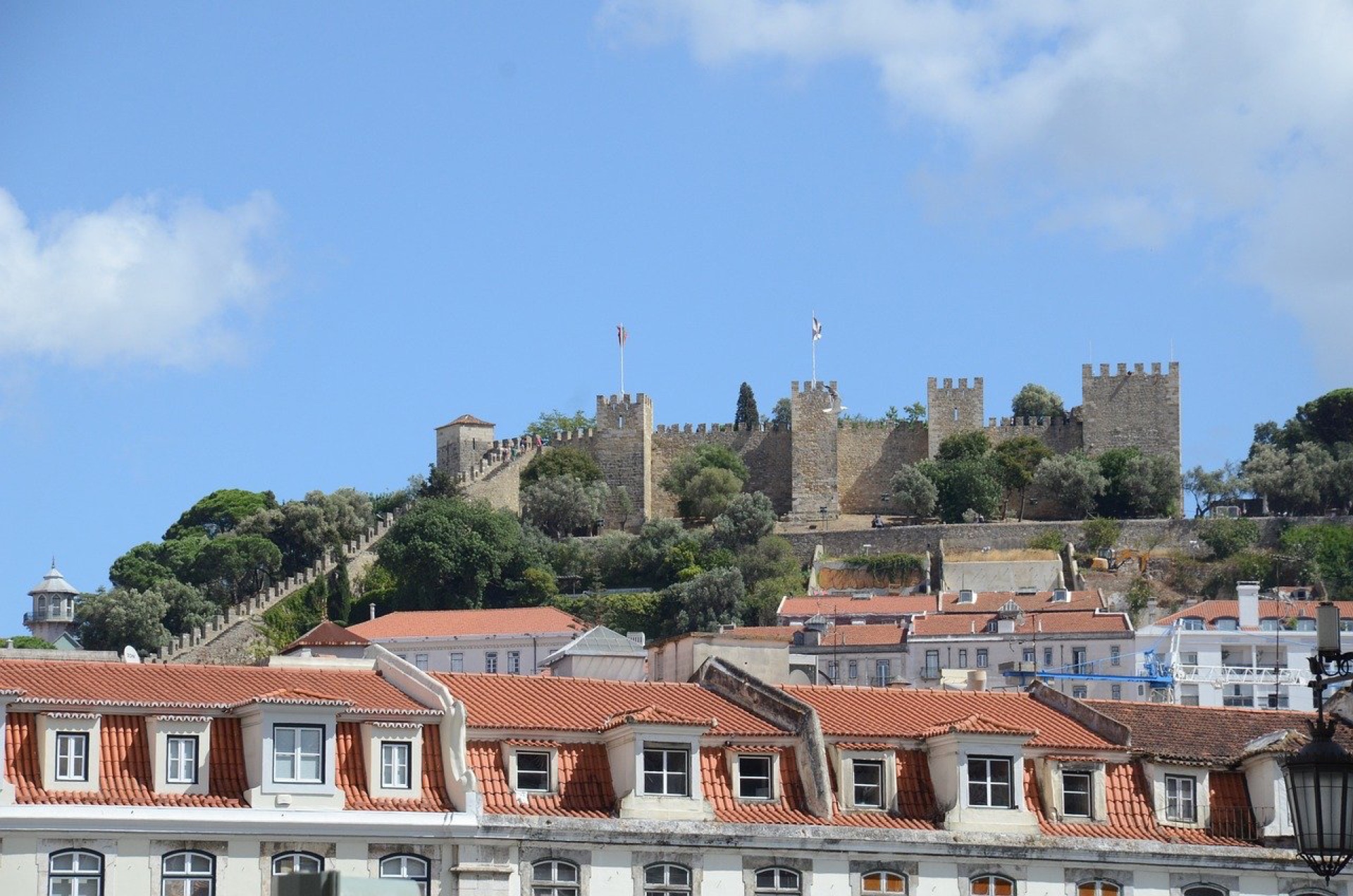
Take the 9:00 train from Rossio station, which is a fifteen-minute walk from Baixa-Chiado, buy a same-day return ticket for under five euros, and you will be in Sintra by 9:40. From there, walk uphill to Pena Palace if your legs are agreeing with you, or take the 434 bus if you would rather save the energy for the palace itself. Pena before eleven is an empty Disney-coloured palace on top of a ridge; Pena after eleven is the same palace with a queue snaking down the gardens. The difference is entirely a matter of how seriously you take this paragraph. Combine the visit with the Moorish Castle next door if you still have walking left in you; the view from the ramparts is worth the climb.
Have lunch in Sintra village, where Tascantiga sits in a comfortable middle ground between tourist trap and locals-only: small Portuguese plates, fair prices, no menu in five languages. After lunch you have two reasonable options. The first is Quinta da Regaleira, ten minutes from the village, with its initiation wells and gardens designed by an eccentric millionaire who took his Freemasonry seriously; it photographs better than any palace and stays interesting for two hours. The second is to catch the bus down to Cabo da Roca, the westernmost point of continental Europe, and then on to Cascais if you want to dip your toes in the Atlantic and take the slow train back along the coast. Either choice has you back in Lisbon around 19:30, with enough light and energy left for a long riverside dinner without setting an alarm for the next day.
Day 3: Belém, LX Factory and time to slow down
Day three is the day to ease off the gas and let the city catch up with you. Take Tram 15E from Praça da Figueira to Belém, which is a thirty-minute ride with views across the river, costing three euros each way unless you have already loaded a Viva Viagem card, in which case the per-trip fare drops by half. Jerónimos Monastery opens at ten in the morning; if you arrive at 9:50 you will be at the front of the queue, and the Manueline cloisters that follow are quite genuinely one of the most extraordinary architectural spaces in southern Europe, all stone lacework and sailors' knots carved into pillars by craftsmen at the height of Portugal's age of maritime expansion.
Across the road, eat one pastel de Belém, not three, not six, because the way to ruin them is to eat them in quantity. The original Pastéis de Belém shop is the obvious queue out front; the trick is that the back room of the same establishment is enormous, turns over fast, and produces the exact same pastel at the exact same price. Take it with coffee, sprinkle salt and cinnamon from the shaker on the counter, and walk it off afterwards along the riverside towards Padrão dos Descobrimentos. The Belém Tower is a five-minute detour further west; whether it is worth the queue depends entirely on how much patience you have left.
In the afternoon, you can safely skip Belém's MAAT museum unless you happen to love minimal architecture, and instead get an Uber across to LX Factory, which is fifteen minutes and around six euros from Belém. It is a converted industrial complex that became, somewhere around 2015, the place in Lisbon where the city's creative class actually spends its weekends: bookshops like the famous Ler Devagar with the floating bicycle suspended over the shelves, a Sunday market under the bridge, two or three restaurants worth eating at, and a coffee shop called Wish Slow at the back where the noise dies down and you can sit for an hour. From there, take the train back from Alcântara-Mar to central Lisbon; if your flight is the next morning, your last dinner in the city should be unfussy, and Taberna da Rua das Flores is a Chiado classic that takes no bookings and rewards anyone who arrives at 19:30 sharp.
How to get around
Walk most of it, because central Lisbon is small in plan but vertical in reality, and the cobblestones are entirely unforgiving on the wrong pair of shoes. Pack one good pair of walking shoes, leave the dress shoes at home, and you will be a different visitor by Sunday afternoon. For longer hops, taxis and Ubers are cheap, with most rides inside the city costing between five and ten euros and arriving in three or four minutes once you order; the metro is reliable and clean but mostly useful as the link from the airport into town and back. The famous yellow trams 28, 12 and 15E are heavily tourist-loaded by ten in the morning and stay that way until twenty hundred hours, so either ride them before breakfast or after dinner, when the locals reclaim them and the experience becomes recognisable again.
Where to stay
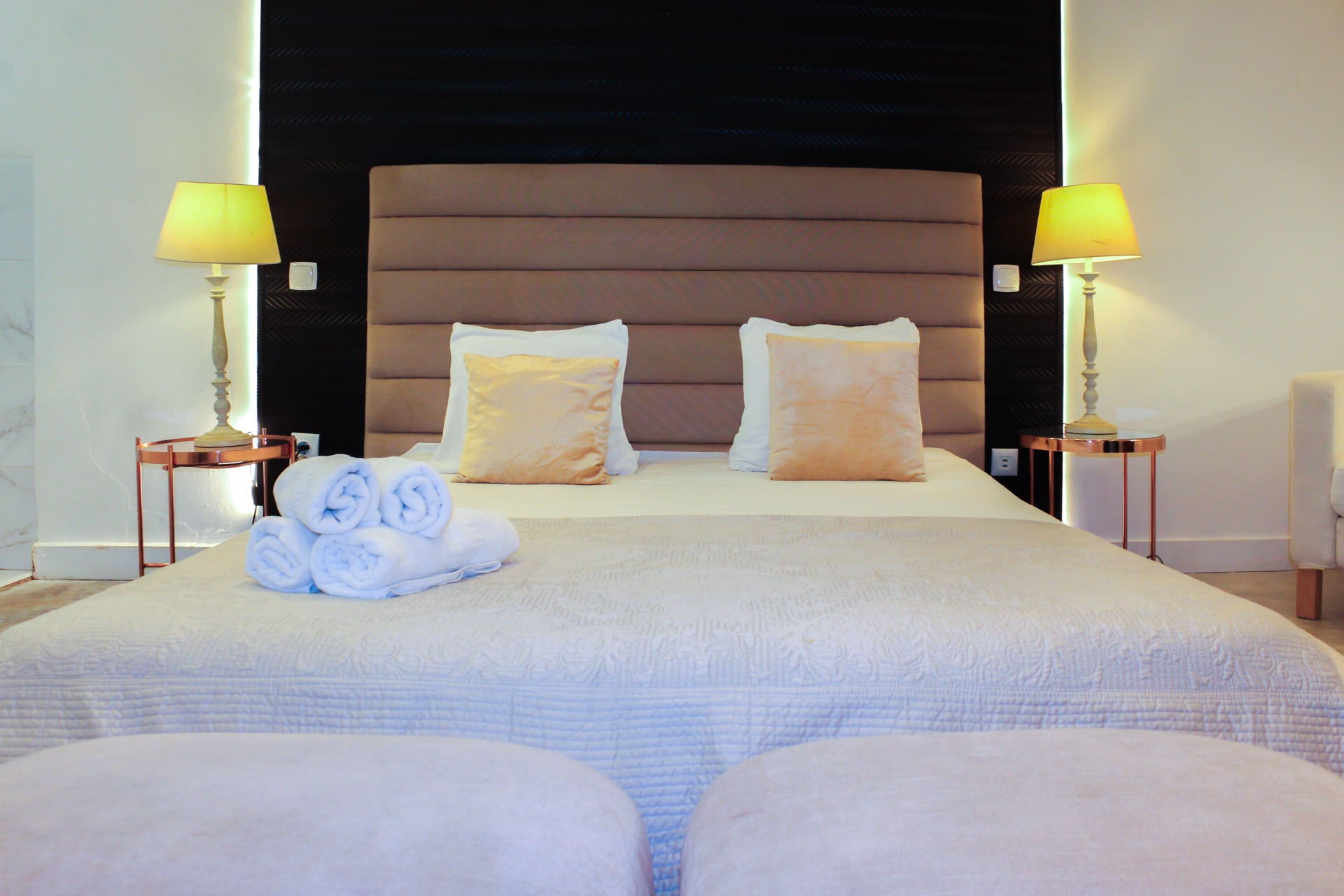
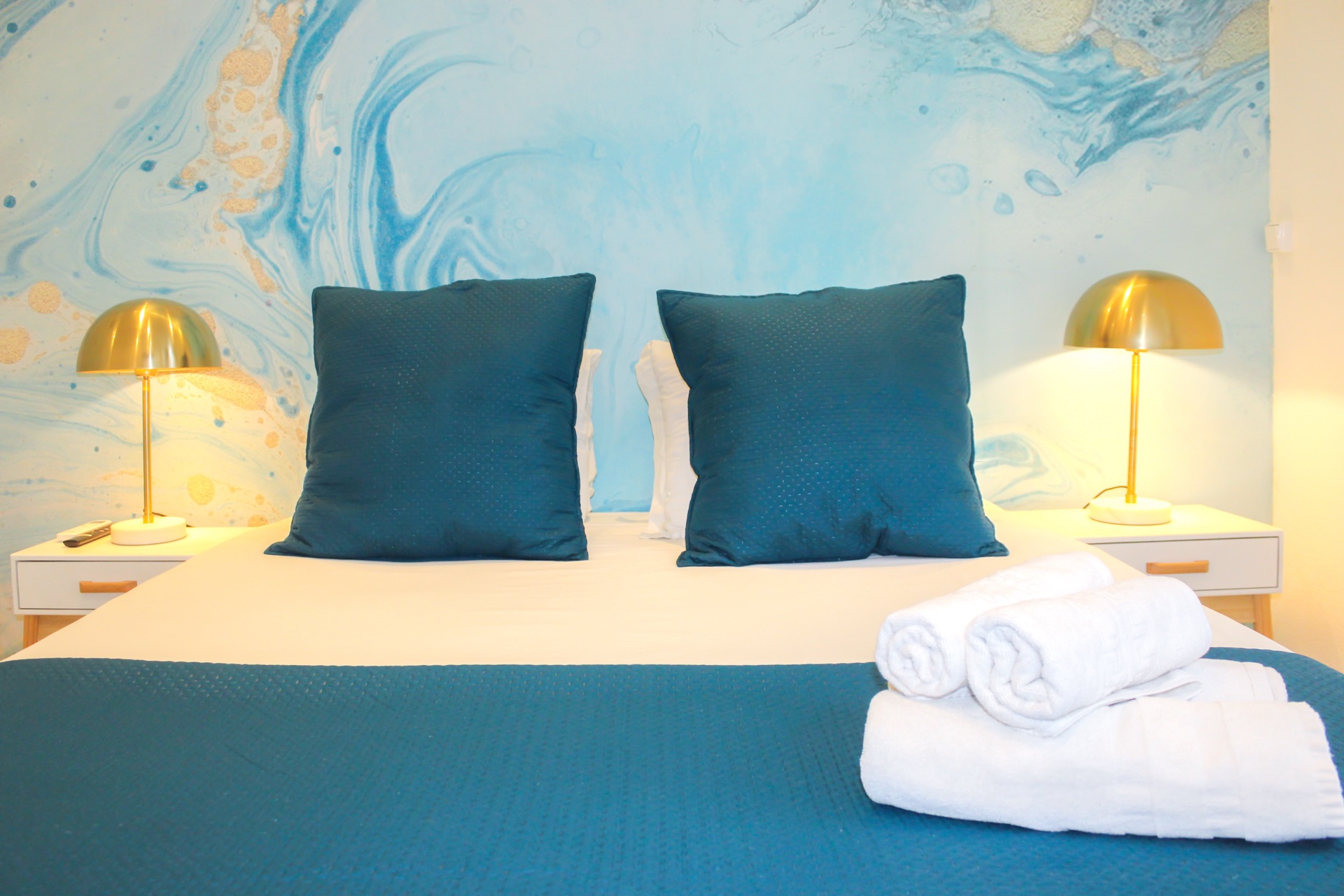
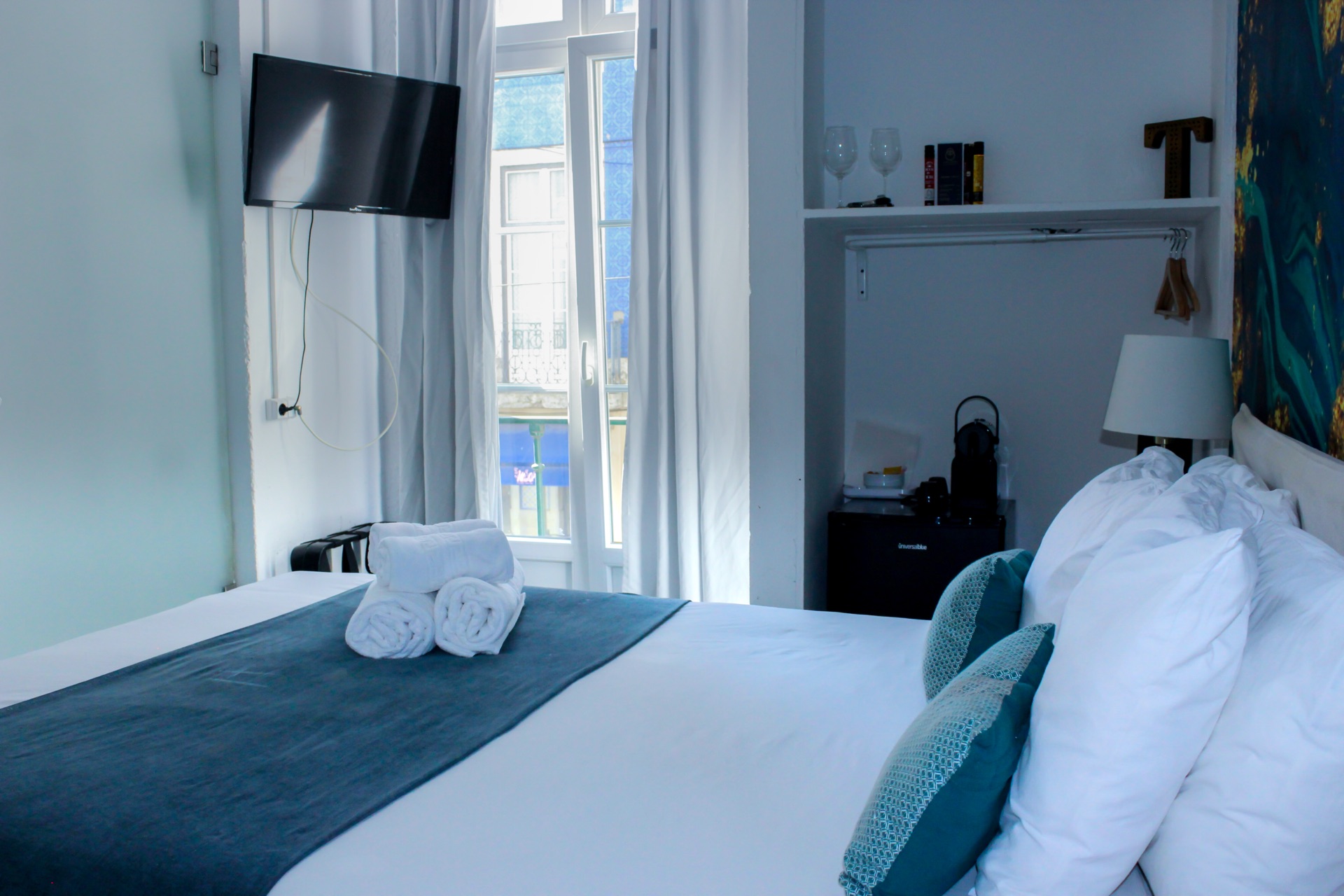
We are biased, but we will tell you anyway: stay central, and stay in a building old enough to have a story. Baixa-Chiado puts you within fifteen minutes' walk of everything on this itinerary except Belém and Sintra, and within ten minutes' walk of three different metro lines, which matters more than it sounds when you are tired at the end of a long day. Our boutique studios at Lisbon Studios sit right on Rua dos Fanqueiros 184, in a Pombaline building three hundred metres from Praça do Comércio, and the eight units range from a compact nineteen-square-metre suite with a private balcony to a fifty-square-metre studio with a freestanding bathtub. If you are looking for the post-walking soak that turns a long Lisbon day into a long Lisbon evening, the Romantic Studio with Jacuzzi was built precisely for that.
Whatever you choose, we answer WhatsApp in minutes, even before you book, and we are happy to recommend a restaurant for the night of arrival or to talk you out of one we know is overrated. Welcome to Lisbon. Three days is plenty, if you spend them well.